Other posts about EVPN/VXLAN in Proxmox VE: Let’s continue inspecting ARP and ND suppression features when using EVPN in Proxmox Virtual Environment (PVE). Initial setup I still have the EVPN1 VNet (VNI = 5001) configured in the PVE cluster (from the previous post), with no IP subnet configured for the VNet. VM1 is on the […]
Category: Server virtualization
Configuring EVPN for L2 VXLAN in Proxmox VE
Other posts about EVPN/VXLAN in Proxmox VE: In the earlier post Configuring VXLAN in Proxmox VE I showed L2 VXLAN data plane implementation on a Proxmox Virtual Environment (PVE) cluster. There was no special control plane for MAC learning so the PVE nodes learned the locations of MAC addresses just on the go, flooding the […]
Configuring VXLAN in Proxmox VE
Other posts about EVPN/VXLAN in Proxmox VE: About VXLAN From Wikipedia: Virtual eXtensible LAN (VXLAN) is a network virtualization technology that uses a VLAN-like encapsulation technique to encapsulate OSI layer 2 Ethernet frames within layer 4 UDP datagrams, using 4789 as the default IANA-assigned destination UDP port number, although many implementations that predate the IANA […]
Installing VirtIO Drivers for Windows VM on Proxmox VE
When installing a Debian Linux virtual machine on a Proxmox Virtual Environment (PVE) host, the Debian installer automatically installs the VirtIO paravirtualization drivers and the QEMU guest agent so that no extra configurations are needed for full cooperation with the virtualization host. In Windows Server 2025 those drivers and utilities are not included. It means […]
Proxmox VE Cluster IP with VRRP
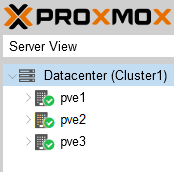
Proxmox Virtual Environment (PVE) has a built-in clustering feature that allows you to access all PVE nodes within the cluster by connecting to any of the nodes, by using a web browser or by connecting to the REST API. I’m using the out-of-the-box Zabbix template (Proxmox VE by HTTP) to monitor my three-node PVE cluster. […]
Debian Template with cloud-init on Proxmox VE
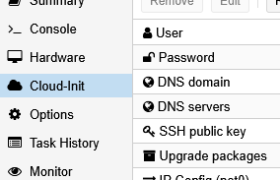
These notes have been tested with Proxmox Virtual Environment (PVE) 8.2.4, Debian 12 and cloud-init 22.4.2 (from Debian 12 packaging). First create a virtual machine and install Debian Linux on it normally, with all the additional tools and updates as required. I usually use the netinstall CD image from Debian. After completing the installation, for […]
MAC Address Move in VM Live Migration
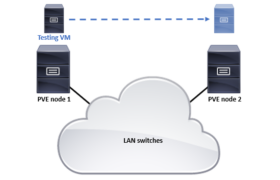
The switches in Ethernet networks learn all connected hosts’ link-layer addresses (layer 2 or MAC (Media Access Control) addresses) dynamically when the hosts communicate in the network and the switches see the traffic. Based on that information the switches are then able to forward frames optimally without flooding. When you disconnect a physical host from […]
HE Dynamic DNS ACME Support for Proxmox VE
Since the Broadcom’s announcement about changing the licensing for VMware vSphere products and discarding the free Hypervisor license, there has been a massive uptake for other virtualization platforms. Also in my own systems, where I reinstalled the ESXi hosts as Proxmox Virtual Environment (PVE) nodes, and imported the existing virtual machines in the new platform. […]
Get Linux Distribution Name and Version with Python
Since Debian 10 Buster there is no minor version number in lsb_release output or /etc/os-release anymore. Bug has been filed, but apparently there is no will to get the full version number back. The dist() and linux_distribution() functions in the platform module in Python have been deprecated in 3.5 and removed in 3.8.0: Also, the […]
NetBox Install on Debian 9
When installing NetBox on Debian 9 and Apache, the instructions in http://netbox.readthedocs.io/en/latest/ are fine, just some small additional operations are needed. The libapache2-mod-wsgi-py3 package needs to be installed as well, otherwise you will get errors about the “WSGIPassAuthorization on” command when starting Apache [this has later been addressed in commit b917e8d] Disable the “000-default” site […]